Renovation Guides
How to Choose an Interior Design Firm
Nestly Editorial
September 27, 2026 • 5 min read

Choose an interior design firm by checking relevant completed work, the person managing your renovation, a clearly defined scope and written commercial terms. Use the same brief when speaking with different firms so you can compare their proposals fairly. A convincing render or a low headline price does not answer all of these questions.
This checklist is for Singapore homeowners planning a BTO, resale HDB, condo or landed-home renovation. It helps you prepare a discussion; it does not certify any firm or replace a review of your own quotation and contract.
1. Prepare one brief before requesting proposals
Write down your property type, expected access or key-collection date, preferred move-in timing and budget. Separate renovation work from furniture and appliances in your budget, and list the rooms you want to change. Identify what you want to retain as well as what you want to replace.
- Must-haves: for example, more kitchen storage, a work area or easier access around furniture.
- Preferences: colours, materials and styles you like or want to avoid.
- Constraints: existing finishes to retain, household needs and work that needs further feasibility checks.
Share the same version with every firm. You can use Nestly's free floorplan concept tool to explore ideas and organise your requirements. AI pictures are conceptual: proportions and building details still need professional checking. The tool's consent explains contact sharing with selected firms.
2. Ask for relevant completed projects
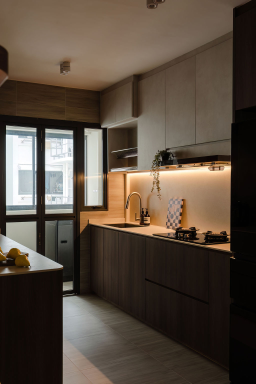
Look for projects with a similar property type and renovation scope. Ask which images show completed work and which are proposed renders. A beautiful kitchen photograph does not tell you its storage capacity, material specification or what was included in the price.
For each example, ask what the owner wanted, what was retained, what changed and which team delivered it. Request permission-based references or a site visit where available; do not assume an occupied home is open for viewing. Browse renovation portfolios to prepare specific questions rather than choosing only by style.
3. Check the business and the people doing the work
Confirm the business name on the proposal, the contracting entity and the person responsible for site coordination. Ask whether the designer you meet will stay involved, who handles subcontractors and who responds when a decision or defect needs attention.
For an HDB renovation, use HDB's contractor information and directory service to check the contractor carrying out the work. Clarify the roles of the design firm and renovation contractor rather than treating their names as interchangeable.
CaseTrust accreditation is a separate check. Verify the exact business against the current CaseTrust list, and ask which scheme applies. CASE describes requirements covering contracts, progressive payments, pricing and deposit protection for accredited renovation businesses. Read the official scheme explanation and ask for the applicable protection documents and terms. A Nestly listing alone does not establish accreditation or a guarantee.
4. Compare scope before comparing totals
Request an itemised proposal. Mark each item as included, excluded or awaiting confirmation, and ask firms to explain differences before deciding which proposal offers better value.
- Carpentry: dimensions, materials, internal fittings, hardware and worktop specification.
- Electrical and plumbing: points, fittings, relocation and responsibility for supply and installation.
- Finishes: preparation work, selected materials and any allowances still to be confirmed.
- Site work: protection, removal, disposal, delivery and cleaning.
- Commercial details: tax treatment, exclusions, provisional allowances and quotation validity.
Illustrative comparison: one proposal includes a kitchen worktop while another lists cabinets only. The lower total is not yet a like-for-like comparison. Ask for the missing scope in writing; do not assume it is covered by a verbal promise.
5. Agree how changes, payments and handover will work
Ask for a written schedule showing milestones, payment triggers and dependencies such as material selection or approvals. Check how changes are priced and authorised, what happens if an item is unavailable, and how delays will be communicated. Avoid relying on an assumed industry-standard payment split.
Read the actual warranty scope, exclusions, reporting procedure and response arrangements. Agree how handover checks and outstanding defects are recorded. If a firm claims a particular accreditation benefit, confirm that its documents support that claim for your project.
6. Use the first meeting to test communication
Ask each shortlisted firm the same questions:
- Which parts of my brief are feasible, and what needs checking on site?
- What is not included in this proposal?
- Who will manage the work and send progress updates?
- How do I approve additional work before it starts?
- What documents and decisions do you need before committing to a schedule?
Pause if important answers remain vague, verbal promises conflict with the quotation, or you are pressed to commit before reviewing the scope. Compare how clearly each firm explains trade-offs as well as its design ideas.
Ready to build your shortlist?
Browse interior design firms or share your renovation brief with Nestly. Matching is free for homeowners; review the contact-sharing consent before submitting. You choose whether to engage a firm after discussing its proposal.
Sources checked on 27 September 2026: HDB contractor information and CASE's renovation accreditation guidance, linked above. Verify current business listings and project-specific terms before appointing a firm.